

Buy Equine IRAP Injection Kits Online: The Definitive Veterinary Guide to Autologous Conditioned Serum (ACS), Interleukin-1 Receptor Antagonist Protein Therapy, and Regenerative Joint Management
In elite equine sports—such as show jumping, dressage, and thoroughbred racing—chronic joint inflammation and progressive lameness represent the most challenging threats to an athletic horse’s career. When a joint is subjected to repetitive mechanical stress or trauma, the surrounding tissues overproduce a destructive inflammatory protein called Interleukin-1 (IL-1).
IL-1 binds directly to signaling receptors on cartilage cells, initiating a rapid catabolic cascade. This pathway actively degrades the structural cartilage matrix, diminishes the protective viscosity of the synovial fluid, and accelerates Degenerative Joint Disease (DJD) or osteoarthritis.
While traditional corticosteroid injections offer temporary relief, repeated use can compromise cartilage metabolism over time.
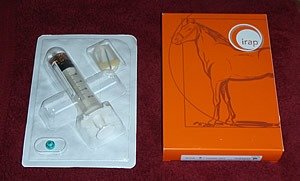
To safely neutralize joint inflammation at its root, veterinarians rely on advanced biological therapies. Orthokine® Vet IRAP Injection 60 (manufactured by Orthogen) is the gold standard in autologous regenerative medicine. Rather than relying on synthetic pharmaceuticals, the patented IRAP Injection 60 mL syringe system uses the horse’s own blood cells to produce a highly concentrated Autologous Conditioned Serum (ACS). This specialized serum contains massive quantities of pure, natural anti-inflammatory cytokines—primarily Interleukin-1 Receptor Antagonist Protein (IL-1Ra)—which block destructive pathways and promote long-term joint tissue healing.
This clinical reference manual outlines the cellular pharmacology, biological mechanisms of action, and precise laboratory processing steps required to utilize Orthokine Vet IRAP 60mL kits successfully.
1. Biological Pharmacology & Mechanism of Action
The clinical efficacy of IRAP therapy depends entirely on targeted receptor blockade within the inflamed equine joint:
                      [Equine Patient Blood Harvested in IRAP Syringe]
                                             |
                         [24-Hour Incubation via Chromium Beads]
                                             |
                     [Centrifugation & Extraction of Pure Serum (ACS)]
                                             |
                          [Intra-Articular Joint Injection]
                                             |
                 -------------------------------------------------
                |                                                 |
       [Destructive Pathway]                             [Protective IRAP Pathway]
      (Excess IL-1 Proteins)                            (Concentrated IL-1Ra Serum)
                |                                                 |
     (Attempts to Bind Receptors)                      (Competitively Binds Receptors)
                |                                                 |
                v                                                 v
   [Cartilage Degradation & Pain]                    [Receptor Permanently Blocked]
                |                                                 |
         (Pathway Stopped) --------------------> <------- (No Damage / Inflammation)
                                             |
                                             v
                         [Halts Degenerative Joint Disease (DJD)]
                                             |
                         [Stimulates Cartilage Matrix Repair]
Competitive Receptor Blockade via IL-1Ra
Interleukin-1 (IL-1) is the main driver behind joint cartilage destruction. The Orthokine IRAP system works by introducing a massive excess of Interleukin-1 Receptor Antagonist Protein (IL-1Ra) directly into the joint space.
Because IL-1Ra matches the shape of the joint’s cellular receptors perfectly, it binds to them competitively, effectively locking out the destructive IL-1 proteins. This biological shield prevents the transmission of inflammatory signals, instantly halting cartilage breakdown, easing structural pain, and reducing localized swelling.
Induction via Patented Borosilicate/Chromium Beads
The Orthokine Vet IRAP Injection 60 syringe is pre-loaded with specially treated, medical-grade glass beads. When the horse’s blood comes into contact with these beads, it mimics a safe tissue injury. This triggers the harvested white blood cells (monocytes and granulocytes) to rapidly synthesize and secrete protective anti-inflammatory proteins, multiplying the baseline concentration of IL-1Ra within the serum.
2. Core Veterinary Clinical Applications
Orthokine Vet IRAP 60 is indicated for the treatment of non-infectious, degenerative, and traumatic joint conditions in horses:
Refractory Equine Osteoarthritis: Targets lameness in joints (such as the stifles, hocks, carpus, and fetlocks) that no longer respond effectively to traditional hyaluronic acid or steroid therapies.
Post-Arthroscopic Rehabilitation: Administered following joint surgeries to minimize the development of inflammatory scar tissue and speed up the healing of internal synovial membranes.
Tenosynovitis & Bursitis Management: Highly effective when delivered into inflamed tendon sheaths or bursae to preserve fiber elasticity and reduce tissue friction.
3. Laboratory Processing & Intra-Articular Protocol
To ensure sterile handling and maximize the concentration of active anti-inflammatory proteins, follow these laboratory standards.
IRAP Injection Treatment Dosing Reference
| Biological Yield Class | Average Aliquot Portions | Injection Dose Volume | Standard Clinical Protocol | Long-Term Storage |
| Orthokine IRAP 60 Kit | 5 to 6 sterile doses per harvest | 4.0 mL to 6.0 mL per joint | 1 injection every 7 to 14 days for a total series of 3 to 4 treatments. | Stable frozen at -18°C for up to 12 months. |
4. Clinical Safety, Precautions, and Contraindications
Strict Septic Joint Exclusion: Never inject IRAP Injection serum into a joint that has an active bacterial or infectious arthritis load. Any microbial activity inside the joint must be fully cleared with systemic antibiotics before using biological therapies.
Professional Administration: Because inserting a needle into a joint space carries inherent risks, the final intra-articular injection must be performed strictly by a licensed equine veterinarian under sterile surgical conditions.
0-Day Competition Clearances: Because IRAP is derived entirely from the patient’s own blood, it contains no synthetic pharmaceuticals or prohibited foreign substances. It features a 0-day withdrawal window under FEI and international racing regulations, making it an excellent management option for performance horses close to event days.
5. Frequently Asked Questions (FAQ)
What is included inside the Orthokine Vet IRAP 60 kit?
Each commercial kit contains a specialized 60 mL autologous processing syringe filled with patented induction beads, a 20G butterfly cannula for blood collection, and a secure syringe cap.
Do I need specialized equipment to use these kits?
Yes. To process the harvested blood into active serum, you must have access to a standard laboratory incubator set to 37°C and a compatible medical centrifuge to separate the serum fractions.
How long can processed IRAP serum be stored frozen?
Once extracted and passed through a sterile 0.22 µm filter, the conditioned serum syringes can be kept frozen at -18°C or lower for up to 12 months. This allows you to store extra doses for future maintenance therapy from a single blood draw.
Where can I buy genuine Orthokine Vet IRAP kits online?
You can securely order authentic, factory-sealed Orthokine Vet IRAP 60 Kits online directly through Global Vet Care. We maintain clinical inventory under strict environmental protocols to guarantee device sterility and long functional shelf life.
6. Elite Regenerative Sourcing from Global Vet Care
At Global Vet Care, we understand that advanced sports medicine demands the highest quality biological devices. Every Orthokine Vet IRAP 60 Processing Kit is sourced through verified distribution networks and maintained under temperature-monitored warehouse parameters to ensure absolute sterility and absolute diagnostic reliability.
Buy Equine IRAP Injection Online
IRAP Injection is a new and effective intra-articular treatment for joint disease marketed by Arthrex VetSystems in the USA. The product was originally developed in Europe, and has been used extensively in Germany. IRAP Injection is an anti-inflammatory protein that counteracts the destructive effects of inflammatory proteins such as Interleukin-1 (IL-1) that are produced within inflamed or arthritic joints. The system has been designed to stimulate the horses’ own white blood cells to produce anti-inflammatory mediators and enzymes, specifically Interleukin 1 receptor antagonist protein (IRAP), which can reduce the inflammation present as a result of degenerative joint disease. Treatment with IRAP Injection utilizes progressive gene therapy to combat osteoarthritis in your horse.
The process of harvesting is quite simple and can be performed as an outpatient and/or potentially on the farm. Blood is collected from the jugular vein and incubated for 24 hours in special syringes that contain glass beads that induce the white blood cells present in the blood to produce and secrete therapeutic proteins, namely, After 24 hours the blood is centrifuged and the serum is separated from the red blood cells. The protein rich serum is then split into 3-6ml doses and the separate doses are frozen for use at a later date
Typically each collection produces enough serum for between 3-5 injections. It is important to note that the injections are only suitable to treat the horse from which the original blood was collected. The injections can be stored for up to 12 months from the date of collection.
Degenerative joint disease is one of the biggest causes of poor performance and a decreased competitive lifespan in the horse. This is true for all types of equine athletes, from racehorses to dressage and show jumping horses. Both young and old horses can be affected by degenerative joint disease resulting in a loss of athletic ability and possible early retirement.
When injected into a joint, the IRAP Injection protein rich serum stimulates a response from cartilage cells, through a process of cell division and increased cell recruitment. This is actually what sets IRAP Injection apart from other intra-articular treatments for joint disease. The fact that IRAP stimulates cartilage cells means that it has a disease modifying component as well as an anti-inflammatory component. The serum also contains cytokines that act to reduce inflammation within the joint. In addition there are other anti-inflammatory proteins produced during the incubation process that work synergistically with the cytokines to further reduce the inflammation within the diseased joint.
What does the treatment with IRAP Injection involve?
The therapy involves three joint injections at 7-14 day intervals. Most positive effects are seen after the second and the third treatment. The majority of horses will be sound after the third injection. In our hands, more than 90% of horses have returned to soundness after IRAP therapy. After injection, we routinely bandage the joint if possible for 2 days, and the horse should be kept on 3 days of strict stall rest, followed by a period of of hand-walking (30-45 minutes). Once the course of injections and the final hand-walking period is completed, horses should receive one week of ridden walk exercise, followed by one week of ridden walk and trot, before returning gradually to regular training program















Reviews
There are no reviews yet.