

Buy Keytruda (Pembrolizumab) 100mg/4mL Injection Online: The Definitive Guide to PD-1 Immune Checkpoint Inhibitor Pharmacology, Oncologic Therapeutics, and Clinical Management
Managing advanced malignancies—such as non-small cell lung cancer ($\text{NSCLC}$), melanoma, renal cell carcinoma, urothelial carcinoma, classical Hodgkin lymphoma, and various mismatch repair-deficient ($\text{dMMR}$) solid tumors—requires an advanced immunotherapeutic agent that unleashes the patient’s own immune system against cancer cells. When malignant tumors evade immune destruction by exploiting inhibitory checkpoint pathways, conventional therapies alone are often insufficient to achieve durable remission.
Left unmanaged, aggressive and treatment-resistant cancers proliferate unchecked, leading to widespread metastasis, organ failure, and declining patient survival.
Relying solely on traditional cytotoxic chemotherapy frequently causes severe systemic toxicity and limited long-term disease control in immunotherapy-sensitive cancers.
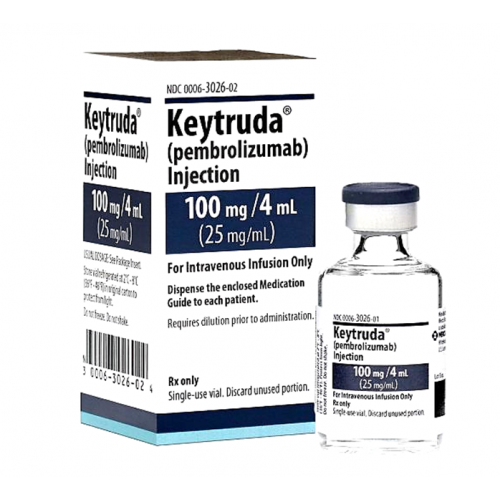
To provide powerful, targeted immune reactivation backed by extensive clinical trials, oncologists rely on gold-standard programmed cell death protein 1 ($\text{PD-1}$) inhibitors. Keytruda Injection ($100\ \text{mg/4 mL}$ single-dose vial) (manufactured by Merck / MSD) is a premier, professional-grade biological antineoplastic formulation powered by Pembrolizumab at a concentration of $25\ \text{mg/mL}$ ($100\ \text{mg}$ total per $4\ \text{mL}$ vial). Packaged in a sterile single-dose glass vial, Keytruda delivers unmatched immuno-oncology efficacy engineered specifically for precision cancer therapy.
Immunotherapy Pharmacology & Checkpoint Kinetics
Keytruda delivers a targeted biochemical mechanism engineered to block immune evasion and reactivate cytotoxic T-lymphocytes:
                  [Keytruda Pembrolizumab 100mg/4mL Intravenous Infusion Administered]
                                              |
                   [Systemic Distribution and Binding to T-Cell PD-1 Receptors]
                                              |
               [Blockade of PD-L1 and PD-L2 Ligand Interaction on Tumor Cells]
                                              |
               -------------------------------------------------
              |                                                 |
     [PREVENTS IMMUNE SUPPRESSION]              [REACTIVATION OF CYTOTOXIC T-CELLS]
   (Blocks Inhibitory Checkpoint Signaling)    (Restores Antitumor Immune Recognition)
              |                                                 |
              v                                                 v
   [Overcomes Tumor Immune Evasion]            [Targeted Destruction of Malignant Cells]
   (Unleashes Endogenous Host Immunity)        (Induces Apoptosis in Tumor Microenvironment)
              |                                                 |
              v                                                 v
   [Durable Long-Term Remission Potential]     [Requires Immune-Mediated Toxicity Monitoring]
   (Provides Sustained Disease Control)        (Manages Potential Autoimmune Inflammatory Events)
              |                                                 |
               =========================> <=====================
                                              |
                                              v
                   [Complete Restoration of Antitumor Immune Surveillance & Efficacy]
                                              |
                   [Extended Progression-Free Survival, Tumor Regression, & Enhanced Quality of Life]
1. PD-1 Receptor Blockade and Immune Reactivation
Pembrolizumab is a humanized monoclonal IgG4 kappa antibody that binds to the programmed cell death 1 ($\text{PD-1}$) receptor expressed on T-lymphocytes. Many tumor cells express PD-L1 or PD-L2 ligands that bind to PD-1, transmitting an inhibitory signal that dampens T-cell activity and allows cancer cells to evade immune surveillance. By blocking this interaction, Keytruda prevents the inhibitory signal, reactivating tumor-specific cytotoxic T-cells to recognize and destroy malignant cells.
2. Pharmacokinetic and Elimination Profile
Intravenous Bioavailability: Administered exclusively via intravenous infusion to achieve immediate systemic bioavailability.
Clearance Kinetics: Cleared from circulation through systemic protein catabolism, with a terminal elimination half-life supporting convenient dosing schedules (every 3 or 6 weeks).
Primary Clinical & Oncologic Indications
Keytruda 100mg Injection is a cornerstone therapy across a wide spectrum of advanced and metastatic oncologic indications:
Non-Small Cell Lung Cancer ($\text{NSCLC}$): First-line and subsequent treatment of metastatic $\text{NSCLC}$ as monotherapy or in combination with platinum-based chemotherapy.
Melanoma: Treatment of unresectable or metastatic melanoma and as adjuvant therapy following complete resection.
Urothelial and Renal Cancers: Management of advanced urothelial carcinoma and renal cell carcinoma.
Microsatellite Instability-High ($\text{MSI-H}$ / $\text{dMMR}$) Tumors: Treatment of adult and pediatric patients with unresectable or metastatic $\text{MSI-H}$ or mismatch repair-deficient solid tumors regardless of tissue origin.
Classical Hodgkin Lymphoma ($\text{cHL}$): Treatment of adult and pediatric patients with refractory $\text{cHL}$ or those who have relapsed following multiple prior lines of therapy.
Recommended Administration and Dosing Protocols
To guarantee absolute sterility, proper dilution, and patient safety, Keytruda must be administered strictly via intravenous infusion under the supervision of qualified oncology professionals.
Dosing Reference Table
The table below outlines standard administration frameworks for Keytruda ($25\ \text{mg/mL}$):
| Indication / Regimen | Standard Dose | Volume Equivalent (25 mg/mL) | Approved Route | Infusion Duration & Schedule |
| Standard Adult Solid Tumors | $200\ \text{mg}$ every 3 weeks | $8.0\ \text{mL}$ (two $4\ \text{mL}$ vials) | Intravenous (IV) Infusion | 30 minutes every 3 weeks |
| Alternative Adult Schedule | $400\ \text{mg}$ every 6 weeks | $16.0\ \text{mL}$ (four $4\ \text{mL}$ vials) | Intravenous (IV) Infusion | 30 minutes every 6 weeks |
Clinical Safety, Immune-Mediated Adverse Reactions, and Storage
Immune-Mediated Adverse Reactions ($\text{imARs}$): Because Keytruda enhances immune activity, it can cause severe and fatal immune-mediated inflammation in healthy organs, including pneumonitis, colitis, hepatitis, endocrinopathies (hypothyroidism, type 1 diabetes), nephritis, and severe skin reactions. Prompt corticosteroid therapy is required if $\text{imARs}$ develop.
Infusion-Related Reactions: Severe or life-threatening infusion reactions can occur. Monitor patients closely during and after the infusion; interrupt or permanently discontinue therapy based on severity.
Cold-Chain Storage Requirements: Unopened vials must be stored refrigerated between 2°C and 8°C (36°F to 46°F) in the original carton to protect from light. Do not freeze. Once diluted, the solution should be administered immediately or stored under refrigerated conditions ($2^\circ\text{C}$ to $8^\circ\text{C}$) for no more than 24 hours.
Frequently Asked Questions (FAQ)
What is the active ingredient in Keytruda Injection?
Keytruda contains Pembrolizumab at a concentration of $25\ \text{mg/mL}$, a humanized monoclonal antibody functioning as a $\text{PD-1}$ immune checkpoint inhibitor.
How is Keytruda administered to patients?
Keytruda is administered strictly as an intravenous ($\text{IV}$) infusion over 30 minutes, typically dosed every 3 weeks ($200\ \text{mg}$) or every 6 weeks ($400\ \text{mg}$).
What are the primary side effects of Keytruda?
Because it boosts immune function, Keytruda can trigger immune-mediated side effects affecting the lungs (pneumonitis), colon (colitis), liver (hepatitis), endocrine glands, and skin, requiring careful medical monitoring.
Where can I buy genuine Keytruda 100mg Injection online?
You can safely source authentic, prescription-verified Keytruda 100mg/4mL Vials online through Global Vet Care (operating under applicable human and specialty pharmaceutical compliance frameworks). We store all biological and temperature-sensitive oncology inventory under rigorous refrigerated controls to guarantee absolute product freshness, safety, and full potency.
Secure Professional Sourcing from Global Vet Care
At Global Vet Care, we understand that managing advanced oncologic therapies requires absolute product integrity and reliable cold-chain logistics. Every vial of Keytruda Injection is sourced through authorized specialty pharmaceutical distribution channels, stored in our specialized medical cold-rooms, and shipped securely with temperature-monitored packaging.
Keytruda 100 mg is the trade name for the drug Pembrolizumab. It is injected into a vein through an IV. Keytruda is a prescription oncology medicine that is given by a health care professional.
Keytruda 100 mg
is the trade name for the drug Pembrolizumab. It is injected into a vein through an IV. Keytruda is a prescription oncology medicine that is given by a health care professional.
Keytruda 100 mg Injection Uses :
Keytruda (Pembrolizumab) is used for the treatment of :
- unresectable or metastatic melanoma.
• metastatic non-small cell lung cancer (NSCLC).
• patients with recurrent or metastatic head and neck squamous cell carcinoma (HNSCC).
• adult and pediatric patients with refractory classical Hodgkin lymphoma (cHL), or those who have relapsed after three or more prior lines of therapy.
• primary mediastinal large B-cell lymphoma (PMBCL).
• certain types of stomach cancer and
• a certain type of cervical cancer.
Keytruda Pembrolizumab 100 mg Injection Work ?
In the body, there is a type of white blood cell that watches out for signs of infection or disease and can also assault cancer cells. These white blood cells are called T cells. On the surface of these T cells are certain proteins known as programmed cell death receptors (PD-1). So that T cells don’t destroy healthy cells, they use these surface proteins, or PD-1, to bind to and communicate with PD-L1 and PD-L2, proteins that permit cells to escape attack from the body’s immune system.
In other words, when the PD-1 protein on T cells comes in contact with PD-L1 and PD-L2 proteins, they are given the signal to allow that cell to live and spread. By blocking PD-1, Pembrolizumab increases the ability of your immune system to attack melanoma cells and tumors. This cancer medicine can release T cells so that it can penetrate melanoma anywhere in your body.
Keytruda 100 mg Injection Side – Effects :
This medicine may cause some serious, life-threatening side-effects. This does not mean that everyone who takes it will experience them. It depends on the medicine and how your body reacts. The following are some of the side effects that are known to be associated with this medicine :
Common Side Effects : Cough ; Joint pain ; Feeling tired ; Loss of appetite ; Mild diarrhea or constipation ; Difficulty falling asleep or staying asleep ; Changes in skin color etc.
Serious Side Effects : Chest pain or shortness of breath ; New or worsening cough ; Pale skin ; Easy bruising or bleeding ; Severe stomach pain ; Bloody or cloudy urine ; Swelling in the ankles or feet ; Rapid heartbeats ; Increased hunger or thirst ; Hoarseness ; Weight gain or weight loss ; Hair loss etc.
These are not all the possible side effects of Pembrolizumab 100mg Injection. If you notice any other side-effects, contact your doctor or pharmacist for further advice.
Keytruda 100 mg Injection – Storage Details :
Many factors can damage your medication, including heat, air, light, and moisture. It’s important to keep in mind that where you store your medication can affect its potency and safety. Following storage instructions will be helpful in storing the drug in the best of manner. Keytruda 100 mg Keytruda 100 mg Keytruda 100 mg
- Store Pembrolizumab Injection in between 2°C to 8°C.
• Store in original carton in refrigerator (35 to 46 degrees F) until time of use
• Keep this anti-cancer drug in a safe place so that children & pets can not reach it.
• Keep your medicines separate from your spouse or other family members. This will make it less likely that you take the wrong ones by mistake. Keytruda 100 mg Keytruda 100 mg Keytruda 100 mg
• Discard Keytruda if it contains particulate matter, is cloudy, or discolored.































Reviews
There are no reviews yet.