

Buy Azium Dexamethasone Injection Online: Premium Synthetic Glucocorticoid for Veterinary Inflammatory and Metabolic Research
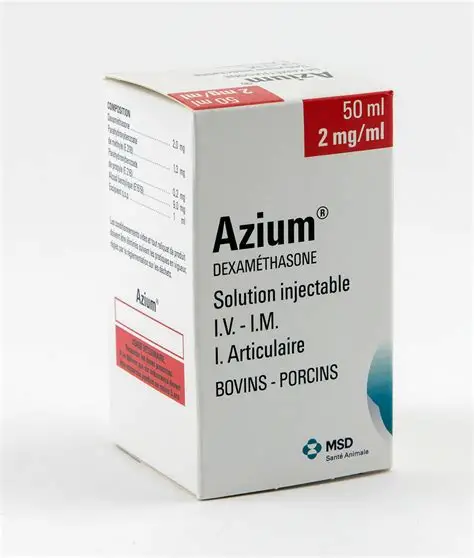
At Global Vets Care, we provide elite, research-grade biochemical formulations designed to deliver complete data certainty in advanced veterinary science. When looking to buy Azium Dexamethasone Injection online, international laboratories and academic institutions require a reliable, high-potency compound that guarantees absolute chemical and pharmacokinetic consistency. Azium Injection (dexamethasone sterile solution, 2 mg/mL) is the definitive non-narcotic synthetic corticosteroid, exhibiting exceptional anti-inflammatory, immunosuppressive, and gluconeogenic properties. Manufactured under strict cGMP-compliant conditions, this fast-acting liquid formulation is specialized for mapping out cellular immune responses, studying joint fluid dynamics in equine arthritis models, and investigating carbohydrate metabolism during bovine ketosis trials.
Dexamethasone represents an exceptional chemical benchmark in veterinary endocrinology and pharmacology. On a milligram-per-milligram basis, its active core is approximately 20 to 30 times more potent than hydrocortisone and roughly 5 to 7 times more potent than prednisone, achieving a powerful therapeutic response with low active plasma baselines. When administered intravenously or intramuscularly to animal models, Azium Injection bypasses the unpredictable absorption profiles and delayed transit timelines associated with oral delivery, ensuring immediate systemic absorption and predictable plasma plateaus. By utilizing our certified sterile Azium solution, your research team eliminates extraneous background variables, allowing for precise tracking of glucocorticoid receptor activation and downstream cytokine inhibition.
Exceptional Quality Controls, Verification, and Seamless Global Delivery
Purchasing your research reagents through Global Vets Care ensures uncompromised data security and streamlined international transit. Moving critical veterinary compounds across international borders into strict regulatory jurisdictions—including the United States, Canada, Europe, Mexico, and Australia—demands flawless manufacturing compliance and rugged product protection.
HPLC-Verified Chemical Integrity: Every batch of Azium Dexamethasone Injection is backed by a verifiable Certificate of Analysis (COA), confirming an exact concentration of 2 mg dexamethasone per milliliter.
Guaranteed Sterility Baseline: Every vial undergoes rigorous multi-stage sterile filtration, minimizing endotoxin levels to prevent baseline immune interference during critical animal trials.
Advanced Packaging Protections: Shipped in heavy-duty, light-shielding, temperature-stabilized packaging to preserve the molecular stability of the liquid matrix during cross-border transport.
Primary Mechanisms and Pathogens Under Active Academic Investigation
Azium Dexamethasone Injection is widely utilized across veterinary laboratories to explore the intricate mechanics of circulatory shock, severe hypersensitivity reactions, and musculoskeletal diseases. Researchers rely on this injectable matrix to study the suppression of pro-inflammatory cytokines (such as TNF-$\alpha$, IL-1, and IL-6) and to monitor its protective effects against tissue destruction in hypersensitivity models. Furthermore, it serves as a core control agent in equine sports medicine for establishing baseline profiles in inflammatory airway disease (IAD) and evaluating joint recovery timelines. Global Vets Care delivers the pristine, verified chemical baseline necessary to ensure your research team can generate reproducible, publication-ready science.
Introduction to Advanced Glucocorticoids and Cellular Regulation
The continuous evolution of veterinary endocrinology, livestock health, and comparative physiology has established synthetic glucocorticoids as foundational elements in both therapeutic and clinical research environments. Historically, managing severe acute inflammation, life-threatening allergic shock, and metabolic derangements in large animal cohorts relied on natural hydrocortisone or primitive steroid derivatives. While these early interventions offered basic relief, they introduced extensive experimental drawbacks, including substantial mineralocorticoid activity (causing unwanted sodium retention and fluid fluid retention), brief durations of action, and unpredictable potencies.
Consequently, modern 2026 veterinary research focuses on highly potent synthetic alternatives like Azium Dexamethasone Injection. As a fluorinated corticosteroid derivative, dexamethasone acts directly on the genetic transcription factors that govern systemic inflammation and carbohydrate distribution. In complex research subjects—such as performance equines, beef cattle, or companion animal models—maintaining complete control over drug absorption and tissue accumulation is vital. Relying on oral formulations introduces massive experimental noise, such as variable gastric pH levels, individual microbiome absorption rates, and extensive first-pass hepatic metabolism.
Using a sterile, premium injectable configuration like Azium ensures immediate bioavailability and linear, predictable clearance curves. Global Vets Care provides this elite reference compound to support high-impact animal trials across the USA, Canada, Europe, Mexico, and Australia. Our absolute focus on chemical purity ensures that research teams can accurately evaluate anti-inflammatory, immunosuppressive, and metabolic interactions without interference from synthetic impurities.
Chemical Composition, Structural Modifications, and Molecular Mechanics
To accurately evaluate the performance and systemic impacts of Azium Dexamethasone Injection within animal subjects, researchers must look closely at its physical chemistry and molecular layout. Dexamethasone possesses the molecular formula:
Chemically, it is described as 9-fluoro-11$\beta$,17,21-trihydroxy-16$\alpha$-methylpregna-1,4-diene-3,20-dione. The addition of a fluorine atom at the 9-alpha position and a methyl group at the 16-alpha position structurally alters its interaction profile, drastically amplifying its glucocorticoid (anti-inflammatory) activity while completely eliminating any measurable mineralocorticoid (water-retention) properties.
                  [9-Alpha Fluorine Modification] (Boosts Glucocorticoid Response)
                                 │
                                 ▼
                     ┌──────────────────────┐
                     │ Pregna-Dienedione    │ ─── Binds Intracellular Glucocorticoid
                     │ Core Structure       │     Receptors (GR)
                     └───────────┬──────────┘
                                 │
                                 ▼
                  [16-Alpha Methyl Substitution] (Eliminates Mineralocorticoid Activity)
The Genomic Modulation of Inflammatory Transcripts
Inside mammalian cell beds, physical trauma, allergen exposure, or immune activation prompts cells to initiate a cascade of pro-inflammatory signals. Upon administration, dexamethasone diffuses effortlessly across the lipophilic cellular membrane and binds with high affinity to the intracellular glucocorticoid receptor (GR) located in the cytoplasm. This binding triggers the release of heat shock proteins, allowing the ligand-receptor complex to homodimerize and translocate directly into the cell nucleus.
Once inside the nucleus, the activated receptor complex operates through two distinct genetic pathways:
Transrepression: The complex physically binds to and neutralizes major pro-inflammatory transcription factors, such as Nuclear Factor-kappa B (NF-$\kappa$B) and Activator Protein-1 (AP-1). This directly halts the transcription of genes encoding inflammatory cytokines, chemokines, and inducible nitric oxide synthase (iNOS).
Transactivation: The complex binds directly to glucocorticoid response elements (GREs) on the DNA backbone, up-regulating the transcription of powerful anti-inflammatory proteins like Lipocortin-1 (Annexin-1). Lipocortin-1 suppresses phospholipase $A_2$, effectively blocking the release of arachidonic acid and cutting off the production of both prostaglandins and leukotrienes at the absolute top of the cascade.
Primary Research Focus: Equine Inflammatory Airway Disease and Bovine Ketosis
Azium Dexamethasone Injection is a core reference compound across international clinical and academic veterinary research, where scientists rely on its rapid onset to explore respiratory, joint, and metabolic crises.
1. Mitigation of Inflammatory Airway Disease (IAD) in Equine Models
Inflammatory Airway Disease and severe equine asthma (heaves) remain leading causes of poor performance in equine subjects. The intense respiratory distress associated with these conditions is driven by massive accumulation of neutrophils, thick mucus secretion, and chronic bronchoconstriction within the pulmonary airways.
Researchers use intravenous Azium Injection to explore pulmonary cytokine modulation. Studies demonstrate that its rapid systemic action suppresses airway hyper-responsiveness, curtails neutrophil migration, and breaks the inflammatory cycle within the lung tissue. This prompt resolution provides a highly reproducible baseline for tracking long-term tissue remodeling and evaluating environmental allergen impacts.
[Pulmonary Allergen Exposure] ──► [NF-κB Activation & Cytokine Surge] ──► [Airway Inflammation & Distress]
                                                                                      │
   ┌──────────────────────────────────────────────────────────────────────────────────┘
   ▼
[IV Azium Injection] ──► [Nuclear GR Translocation] ──► [NF-κB Inactivation] ──► [Airway Resolution & Relief]
2. Gluconeogenic Stimulation in Bovine Ketosis Trials
Dairy cows in early lactation frequently slip into a state of negative energy balance, where the metabolic demands of milk production outpace their energy intake. This imbalance forces the rapid mobilization of body fat stores, overwhelming the liver and generating toxic levels of ketone bodies (acetoacetate and $\beta$-hydroxybutyrate), leading to clinical ketosis.
In these metabolic models, Azium serves as a vital tool for driving gluconeogenesis. Administering dexamethasone triggers the rapid breakdown of muscle proteins into glucogenic amino acids and reduces glucose use by peripheral tissues. This action forces blood glucose levels up sharply, providing an efficient substrate pool to break the ketotic cycle and help stabilize the animal’s metabolic framework.
3. Joint Capsule Perfusion and Arthritis Research
In equine orthopedic science, dexamethasone is utilized as a vital reference standard for investigating cartilage protection. Researchers inject the compound to study the reduction of matrix metalloproteinases (MMPs) within highly inflamed synovial fluid, helping establish targeted strategies to prevent joint degradation in performance horses.
Secondary Research Fields: Dermatological Allergies and Shock Models
Beyond airway and metabolic tracking, Azium Dexamethasone Injection provides essential insights for laboratories studying severe immune reactions and vascular collapse.
Controlling Acute Hypersensitivity and Anaphylaxis
Vascular alterations during acute allergic reactions are heavily mediated by massive mast cell degranulation. Research shows that administering Azium curtails histamine and leukotriene-induced capillary permeability, giving scientists a highly effective model for exploring post-exposure tissue protection and shock prevention.
Secondary Adrenal Insufficiency Mapping
In veterinary endocrinology models, Azium is utilized to perform the standard low-dose dexamethasone suppression test (LDDST). By evaluating how the hypothalamic-pituitary-adrenal (HPA) axis responds to exogenous dexamethasone, researchers can accurately differentiate between pituitary-dependent Cushing’s disease and adrenal tumors in canine models.
International Supply Pipeline, Compliance, and Purity Protections
Operating a secure global network for sterile veterinary injectables requires deep adherence to international cGMP manufacturing standards, detailed chemical testing, and strict border biosecurity compliance. Global Vets Care ensures its entire logistical infrastructure is optimized to seamlessly clear the strict customs regulations of the United States, Canada, Europe, Mexico, and Australia.
Because Azium Dexamethasone Injection interfaces directly with highly sensitive vascular networks and metabolic systems, any underlying product contamination can completely alter your research data. For example, if a batch contains residual bacterial endotoxins from manufacturing, injecting the solution will trigger an unintended immune cascade and fever. This reaction introduces a major hidden variable, making it impossible to separate the true performance of the glucocorticoid from an adverse reaction to a contaminated product.
Global Vets Care removes these experimental risks through a rigorous quality control framework:
High-Performance Liquid Chromatography (HPLC): Every batch is verified to ensure an exact concentration of 2 mg dexamethasone per milliliter, confirming the absolute absence of active synthesis precursors or degradation compounds.
Gas Chromatography-Mass Spectrometry (GC-MS): Validates the complete removal of all residual manufacturing solvents, ensuring clean tissue compatibility.
Limulus Amebocyte Lysate (LAL) Testing: Every multi-dose vial is certified pyrogen-free and confirmed to sit safely below established international thresholds, providing a perfectly clean baseline for sensitive animal models.
To preserve these molecular properties during global transit, our products are shipped in heavy-duty, light-shielding, temperature-stabilized packaging, protecting the liquid matrix from thermal breakdown or crystallization while passing through international customs clearing centers.
Comparative Overview of Veterinary Corticosteroid Formats
When designing a robust, multi-week animal research trial, selecting the ideal pharmaceutical delivery path is critical for ensuring data reproducibility and minimizing animal stress variables.
| Corticosteroid Compound | Anti-Inflammatory Potency | Mineralocorticoid Activity | Systemic Bioavailability | Primary Experimental Vulnerability |
| Hydrocortisone Injection | Low Baseline ($1\times$) | High ($1\times$) | Variable Absorption | High risk of fluid retention, electrolyte imbalances, and brief duration of action. |
| Prednisone Oral Tablet | Moderate ($4\times$) | Low ($0.8\times$) | Inconsistent | Requires hepatic conversion to active prednisolone; unsuited for acute crisis tracking. |
| Azium Injection (Dexamethasone) | Ultra-High ($25\times\text{ to }30\times$) | None ($0\times$) | Complete ($100\%$ via IV) | Requires careful monitoring of long-term immune suppression and HPA axis suppression. |
By maintaining an exceptionally stable, linear absorption profile and a powerful duration of cellular action, Azium Dexamethasone Injection minimizes background noise in your research models. This consistency gives your team a clean, reliable framework for tracking real-time immune regulation and calculating precise metabolic clearance metrics.
Global Vets Care is honored to serve as a premier supplier to the international research community. By combining flawless molecular purity, clear analytical documentation, and a highly dependable global logistics network, we give your laboratory the foundation needed to drive next-generation scientific discoveries.
Dexamethasone is a member of the glucocorticoid class of hormones. This means they are steroids but, unlike the anabolic steroids that we hear about regarding sports medicine, these are catabolic steroids. Instead of building the body up, they are designed to break down stored resources (fats, sugars and proteins) so that they may be used as fuels in times of stress. Cortisone would be an example of a related hormone with which most people are familiar, though cortisone (more correctly called cortisol) is a natural hormone produced by the body’s adrenal glands, whereas dexamethasone is synthetic.
In most cases, we do not use glucocorticoids for their influences on glucose and protein metabolism; we use them because in higher doses they are broadly anti-inflammatory. Their uses fit into several groups:
- Anti-inflammatory – especially for joint pain and itchy skin.
- Immune-suppression – treatment of conditions where the immune system is destructively hyperactive. Higher doses are required to actually suppress the immune system.
- Cancer chemotherapy – although usually prednisolone, another steroid, is favored for this use.
- Central nervous system disorders – usually after a disk episode to relieve swelling in the spinal cord.
- Blood calcium reduction – in medical conditions where blood calcium is dangerously high and treatment is needed to reduce levels to normal.
- Dexamethasone also has some use in
Side Effects
Dexamethasone is commonly used for several weeks or even months at a time to get a chronic process under control. Once the condition is controlled, it is important that the dose be tapered to the lowest effective dosing frequency once the condition is controlled. The reason for this is that body will perceive these hormones and not produce any of its own. In t




































Reviews
There are no reviews yet.